
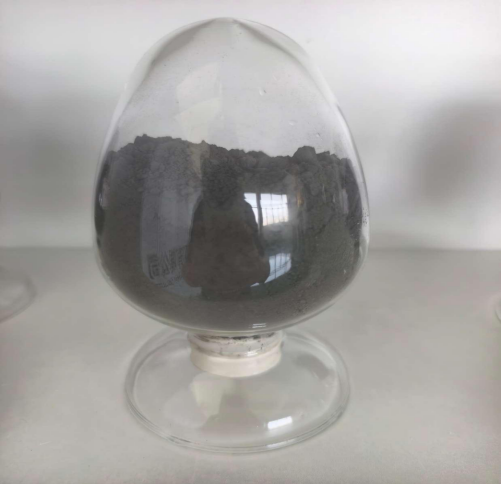
Our LFP cathode is built on a liquid-phase co-precipitation iron-phosphate (FP) route, followed by precise crystallization, nanostructure control, and controlled doping. Unlike conventional solid-phase or mixed-phase processes, we emphasize atomic-level uniformity in the precursor stage for tighter control over particle morphology, impurity distribution, and final electrochemical behavior.
Core Process Technologies
1. Liquid-phase co-precipitation (FP to LFP)
We synthesize iron phosphate precursors with highly uniform elemental distribution. Atomic-scale homogeneity of Fe and P; narrow particle size distribution at primary particle level; reduced defect concentration during lithiation; lower waste and process complexity than traditional routes. This precursor quality is the foundation for high compaction density and consistent large-batch performance.
2. Primary particle control and crystallization engineering
Precise control of sintering temperature, residence time, and crystallization kinetics regulates primary particle growth and secondary particle aggregation. Spherical or near-spherical secondary particle morphology; controlled primary particle size in the sub-micron range; optimized packing efficiency during electrode compaction; reduced lithium-ion diffusion path length.
3. Nanomaterial science and nanocrystal growth control
Nanocrystal growth regulation suppresses abnormal grain growth while maintaining sufficient crystallinity for stable electrochemical performance. Improves crystal uniformity and reduces micro-cracking during cycling; enhances structural stability under high-rate charge/discharge; contributes directly to long cycle life (>12,000 cycles at cell level).
4. Controlled doping and nanodoping technology
Uniform aluminum-based and trace-element doping via controlled co-precipitation and surface-reshaping. Doping weakens oxidative reactivity at elevated potentials, improves lattice stability during Li⁺ insertion/extraction, enhances electronic conductivity and interface stability, and prevents localized over-lithiation or structural collapse. Our method ensures stable dopant distribution throughout the particle, not just at the surface.
Material Advantages
- High compaction density without excessive particle hardness
- Stable electrochemical behavior across large production batches
- Compatibility with high-areal-loading electrodes
- Strong suitability for large-format cells (280Ah / 314Ah)
Representative Specifications
| Parameter | Typical Performance |
|---|---|
| Compaction density | >2.70 g/cm³ |
| Particle size (D50) | ~3–4 μm |
| Surface area | ~12–13 m²/g |
| Crystal morphology | Uniform, well-crystallized |
| Industrial status | Commercial production |
Contact us for full spec sheets.